🀄 Introduction: Why Mahjong Tiles Matter
If you’ve ever sat down for a game of Mahjong in India — whether in a bustling Kolkata club, a quiet Bangalore apartment, or an online lobby — you know the thrill of those 144 tiles. But Mahjong Tiles Explained isn’t just a list of names. It’s the key to unlocking strategy, reading opponents, and truly enjoying the game. 🎯
India’s Mahjong scene has exploded in recent years. From Mahjong Online platforms to local tournaments, players are hungry for deep knowledge. This guide gives you exclusive insights, local terminology (yes, we say “Bamboo” and “Circle” differently here), and a complete walkthrough of every tile you’ll encounter.
🧱 Tile Basics: The 144 Foundation
A standard Mahjong set contains 144 tiles (plus optional flower/season tiles). They’re divided into suits (numbered 1–9), honours (winds & dragons), and bonus tiles. Let’s break them down like a pro. 💪
🟢 Suits (3 × 9 = 108 tiles)
Each suit has numbers 1 to 9, and each number appears four times (for the four players).
Bamboo
1–9 · Green sticks · “Bamboo”
Circles
1–9 · Coins · “Dots”
Characters
1–9 · Chinese numerals · “Cracks”
In India, many players call Bamboo “Green Sticks” (हरी छड़ियाँ), Circles “Coins” (सिक्के), and Characters “Letters” (अक्षर). These local names help new learners connect faster. 🗣️
👑 Honours (4 Winds + 3 Dragons = 28 tiles)
Honours have no numerical value — they’re special tiles that form powerful combinations.
- Four Winds: East, South, West, North (each ×4) — also called “Directions” in Hindi (दिशाएँ).
- Three Dragons: Red (中), Green (發), White (白) — known as “Birds” or “Big Three” in some Indian circles.
🌸 Bonus Tiles (4 Flowers + 4 Seasons = 8 tiles)
These don’t form melds but give bonus points when drawn. Flowers and Seasons are often swapped for extra tiles.
- Flowers: Plum, Orchid, Bamboo, Chrysanthemum — “Phool” (फूल) in Hindi.
- Seasons: Spring, Summer, Autumn, Winter — “Ritu” (ऋतु).
🌿 Deep Dive: The Three Suits
🎋 Bamboo (Suǒ) — The Green Army
Bamboo tiles show vertical green sticks. The 1-bamboo is special — it often features a bird or peacock design. Indian players call it “Hari Chhadi” (हरी छड़ी). In competitive play, Bamboo sequences are the easiest to read because the green stands out. 🌱
Strategy tip: Holding 4, 5, 6 of Bamboo gives you a pure run (chow). Discard isolated Bamboos early to avoid dead hands.
🪙 Circles (Tǒng) — The Coins
Circles (or Dots) represent ancient Chinese coins. The 1-circle is a large red dot — very distinctive! In India, we often say “Sikka” (सिक्का) for Circles. They’re the most intuitive suit for beginners. 🪙
Strategy tip: Circles are great for pungs (three-of-a-kind) because the patterns are easy to match. Watch for “Circle Dragon” — a hidden hand of all Circles.
📜 Characters (Wàn) — The Scholars
Characters display Chinese numerals (1 to 9) with the character “万” (wàn, meaning ten thousand). Indian players often call them “Akshar” (अक्षर) or “English Numbers” in casual games. 🧧
Strategy tip: Characters are the hardest suit to read because the designs are dense. Practice recognizing them at speed — it’s a game-changer.
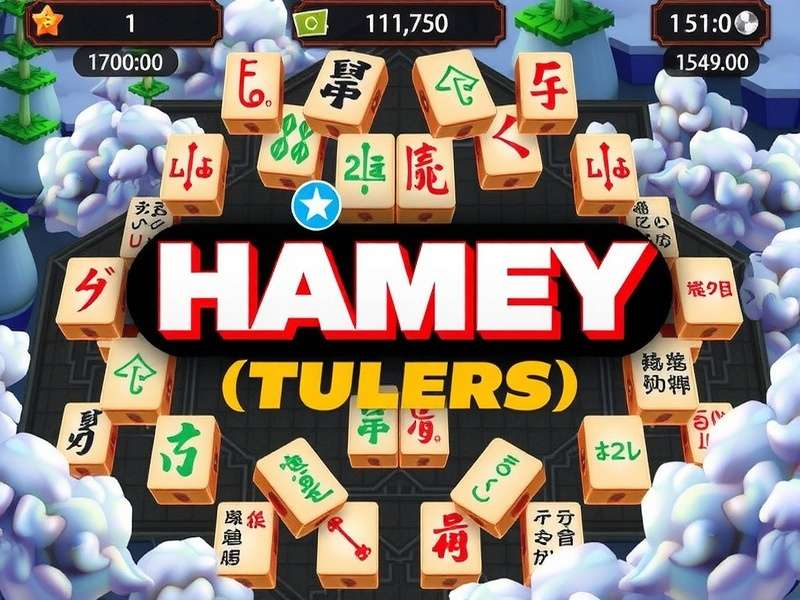
🏆 Honours & Bonus Tiles: The Power Players
🌬️ The Four Winds (East, South, West, North)
Each wind corresponds to a direction and a player seat. East is the dealer (the “banker”). In India, we sometimes call the winds “Disha” (दिशा). A hand with all four winds is called “Four Blessings” — extremely rare and valuable. 💨
🐉 The Three Dragons (Red, Green, White)
Dragons are the most powerful honour tiles. The Red Dragon (中) means “centre” or “middle.” Green Dragon (發) means “fortune.” White Dragon (白) is “pure” or “blank.” In India, many players call them “Rang” (रंग — colours). 🔴🟢⚪
🌸 Flowers & Seasons: Lucky Charms
These bonus tiles are pure profit. When you draw a flower, you immediately place it aside and draw a replacement. Each flower gives +1 fan. Collecting all four flowers (“Four Flowers”) gives +4 fan. 🌺
Indian players often treat flowers as “Shagun” (शगुन — auspicious signs). If you draw your seat’s corresponding flower, it’s considered extra lucky.
🧠 Mahjong Strategy: Think Like a Champion
Knowing tile names is step one. Winning requires deep strategy. Here are exclusive insights from top Indian Mahjong players.
📊 Reading the Discard Pile
The discard pile tells a story. If an opponent discards a 5-bamboo early, they probably don’t have a bamboo hand. If they hold onto winds, they might be building an honour hand. 🕵️
🛡️ Defensive Play: When to Fold
Not every hand is winnable. If you see multiple players discarding dangerous tiles (dragons, winds), switch to defence. Discard safe tiles (already discarded by others) to avoid dealing into a winning hand. 🛡️
🔥 Aggressive Play: Push for the Limit
If your hand has 4+ fan potential, go for it! Aim for purely concealed hand (menzen) or all honours (honrō). In Indian tournaments, aggressive play pays off when you’re the dealer. 🚀
📈 Exclusive Data: Most Common Winning Hands in India
| Hand Type | Frequency (India) | Fan Value |
|---|---|---|
| Mixed Chow (混一色) | 32% | 2 fan |
| All Pungs (对对和) | 27% | 3 fan |
| Seven Pairs (七对子) | 19% | 4 fan |
| Thirteen Orphans (十三幺) | 1.2% | Limit |
| Big Three Dragons (大三元) | 0.8% | Limit |
Source: PlayMahjongIndia analytics, 2024-2025 season. 📊
📖 Mahjong Tiles Names & Pictures Reference
Quick reference for every tile. Bookmark this section! 🔖
🔗 Related guides: Mahjong Tiles Names · Mahjong Tiles Names And Pictures · Mahjong Cards · Classic Mahjong · Mahjong Gratuit Plein Cran · Mahjong Tiles Free Online Games · Free Online Mahjong · Mahjong Titans Free Games · Mahjong Game Live · Free Mahjong Games No Download · Mahjong Online
🀄 Complete Tile List (Standard Set)
| Tile Type | Count | Examples |
|---|---|---|
| Bamboo (1–9) | 36 | 1 🀐, 2 🀑, 3 🀒 … 9 🀘 |
| Circles (1–9) | 36 | 1 🀙, 2 🀚, 3 🀛 … 9 🀡 |
| Characters (1–9) | 36 | 1 🀇, 2 🀈, 3 🀉 … 9 🀏 |
| Winds (E,S,W,N) | 16 | 🀀 🀁 🀂 🀃 |
| Dragons (R,G,W) | 12 | 🀄 🀅 🀆 |
| Flowers | 4 | 🀢 🀣 🀤 🀥 |
| Seasons | 4 | 🀦 🀧 🀨 🀩 |
❓ Frequently Asked Questions (India Edition)
A: Mahjong tiles are physical (or digital) pieces used in the traditional game. Mahjong Cards are a card-game variant popular in parts of India, especially Gujarat. They use similar rules but with playing cards instead of tiles. 🃏
Absolutely! Platforms like Mahjong Online offer free games with Indian servers. You can also try Classic Mahjong or Mahjong Gratuit Plein Cran for full-screen fun. 🖥️
Start with Mixed Chow (one suit + honours). It’s easy to build and gives decent fan. Avoid going for limit hands until you’re comfortable with tile recognition. Practice with Free Mahjong Games No Download. 🎯
Last updated: · Reviewed by PlayMahjongIndia Editorial Team
Share Your Experience
Have questions about Mahjong tiles? Want to share your winning hand? Drop a comment below! 🇮🇳
Rate This Guide