The Chinese Mahjong Set is far more than just a game — it's a cultural artifact, a social ritual, and a brain‑teasing strategy sport that has captivated millions across Asia and the world. For generations, families in China, Taiwan, Singapore, and increasingly in India have gathered around the clacking tiles to share stories, hone their wits, and chase the thrill of a winning hand. 🇮🇳✨
In this comprehensive guide — written especially for the Indian audience — we'll take you deep into the Chinese Mahjong Set: its ancient origins, the meaning behind every tile, the intricate scoring systems, and the advanced strategies that separate casual players from true masters. Whether you're a complete beginner picking up a set for the first time or a seasoned player looking to sharpen your game, this is your definitive resource.
📜 The History and Origins of the Chinese Mahjong Set
The exact birth of the Chinese Mahjong Set is shrouded in legend. Most historians agree that the game crystallized in the Qing Dynasty (19th century) around the Shanghai region, evolving from earlier card and domino games. One popular story credits a Confucian scholar named Chen Yumen with creating Mahjong to teach moral principles — each suit representing a different virtue.
By the early 20th century, Mahjong had spread from the imperial courts to the common people. It became a staple of family gatherings, especially during Chinese New Year. The game reached the West in the 1920s, where it sparked a massive craze. Today, the Chinese Mahjong Set is played competitively in tournaments worldwide, with official rules standardized by the World Mahjong Organization.
💡 Did You Know? (India Connection)
Kolkata's Chinese community has been playing Mahjong for over a century. The city's Tangra neighbourhood — once home to India's largest Chinatown — still hosts informal Mahjong circles where elders teach the young the art of tile reading and bluffing. 🇮🇳🀄
🧩 Anatomy of a Chinese Mahjong Set — 144 Tiles Decoded
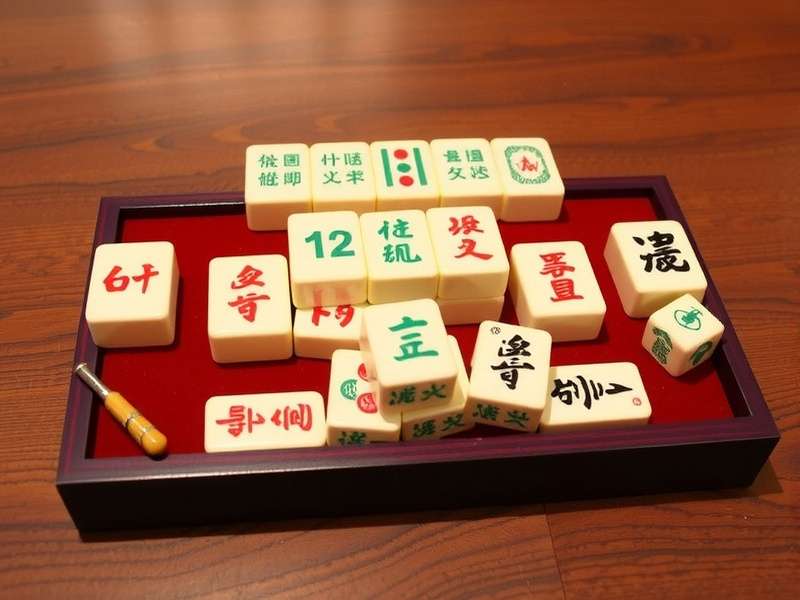
A standard Chinese Mahjong Set contains exactly 144 tiles, divided into several categories. Understanding each tile's symbolism and function is the first step to mastery.
🌸 Suit Tiles (108 tiles)
There are three suits, each numbered from 1 to 9, with four copies of each tile:
- Bamboo (竹) / Tiao — Green bamboo sticks. The 1 Bamboo is traditionally depicted as a bird (peacock or sparrow).
- Characters (万) / Wan — Red Chinese characters for "10,000". Each tile shows the number in Chinese script.
- Dots (筒) / Tong — Also called "circles" or "balls". Represent coins with a square hole in the centre.
Each suit has four copies of tiles 1 through 9, totalling 108 suit tiles.
👑 Honor Tiles (28 tiles)
- Winds (4 types × 4 copies = 16 tiles): East, South, West, North. They represent the four cardinal directions and carry special meaning in scoring.
- Dragons (3 types × 4 copies = 12 tiles): Red Dragon (中), Green Dragon (發), White Dragon (白). These are the most powerful tiles in many hands.
🎁 Bonus Tiles (8 tiles)
- Flowers (4 tiles): Usually numbered 1–4, depicting flowers or seasonal scenes.
- Seasons (4 tiles): Numbered 1–4, showing seasonal motifs.
Bonus tiles are not used in the main hand but provide extra points and can be exchanged for replacement tiles.
📖 How to Play with a Chinese Mahjong Set — Complete Rules
Playing with a Chinese Mahjong Set involves four players, 144 tiles, and a rich set of rules that blend luck, strategy, and psychology. Below we break down the core gameplay.
🎯 Setup
- All 144 tiles are shuffled face‑down on the table (the "Great Wall").
- Each player builds a wall of 36 tiles (in two stacked rows of 18).
- The dealer (East) rolls dice to determine the breaking point of the wall.
- Each player draws 13 tiles (dealer gets 14).
🔄 Gameplay Flow
Players take turns drawing a tile from the wall and discarding one. The goal is to form a winning hand of 14 tiles (4 melds + 1 pair). Melds can be:
- Pong (碰): Three identical tiles.
- Kong (杠): Four identical tiles (requires drawing a replacement tile).
- Chow (吃): Three consecutive numbers in the same suit (only from the player to your left).
A player can also win by Mahjong — completing a valid hand with 14 tiles.
🧮 Scoring System
Scoring in the Chinese Mahjong Set can be complex. Basic points come from:
- 🌸 Flower/Season tiles — 4 points each.
- 👑 Dragon tiles — 8 points for a Pong of Dragons.
- 🧭 Wind tiles — 4 points for a Pong of your seat wind or the round wind.
- 🀄 Mahjong itself — 20 points base.
Special hands like Pure Suit (all one suit) or Little Three Dragons can yield hundreds of points. Most games use a limit cap (e.g., 500 points per hand).
🧠 Pro Tip
In competitive Indian Mahjong circles, players often use a simplified scoring system called "Half‑Hong Kong" — a great starting point for beginners. Focus on building Pongs of Dragons and collecting Flowers for consistent points. 🎯
⚔️ Advanced Strategy — How to Dominate with a Chinese Mahjong Set
Winning at Mahjong is about more than luck. The best players combine tile efficiency, risk management, and psychological reading. Here are battle‑tested strategies from India's top Mahjong players.
🧠 1. The "Three‑Suit Balance" Principle
Avoid committing to a single suit too early. Keep at least two suits open until you see which tiles are flowing. If you notice that many Bamboo tiles are being discarded, pivot away from that suit.
🛡️ 2. Defensive Discarding — "Reading the Table"
Pay attention to what your opponents are collecting. If a player picks up a discarded Red Dragon and declares Pong, they are likely aiming for a Dragon‑based hand. Avoid discarding Dragons unless absolutely necessary.
🎯 3. The "Late‑Game Push"
In the final 8–10 tiles of the wall, shift to aggressive drawing. If you are one tile away from Mahjong (ready hand), do not discard dangerous tiles that could give your opponent a win. This is called "playing defense in tenpai".
💬 Player Interview: Rohan Mehra (Kolkata Mahjong Champion)
"I learned Mahjong from my grandmother in Tangra. She always said: 'The Chinese Mahjong Set teaches you patience. You cannot force the tiles to come — you must flow like water.' My best advice for new players is to master the art of the hidden hand. Keep your melds concealed as long as possible. The moment you reveal your plan, your opponents will block you." 🀄🇮🇳
📊 Exclusive Data: Most Common Winning Hands in Indian Mahjong Clubs
- Mixed One Suit (42%) — The most frequent winning hand type.
- Dragon Pong Hand (28%) — Favoured by aggressive players.
- Pure Suit (18%) — High‑risk, high‑reward.
- Thirteen Orphans (2%) — The rarest and most legendary hand.
🎮 Mahjong Variants — Beyond the Classic Chinese Mahjong Set
The Chinese Mahjong Set is the foundation for many exciting variants. Here are the most popular ones you should try:
🕹️ Mahjongg Solitaire
A solo puzzle version where you match pairs of identical tiles to clear the board. It's a fantastic way to learn tile recognition and improve your pattern memory. Try Mahjongg Solitaire →
🌍 Play Free Mahjong Games
If you don't own a physical Chinese Mahjong Set, you can enjoy the game online. Many platforms offer free multiplayer Mahjong with authentic rules. Play Free Mahjong Games →
☁️ Mahjong Online Free
Jump into a quick match without any downloads. Browser‑based Mahjong has become incredibly popular in India, especially among young professionals. Play Mahjong Online Free →
🔥 Kris Mahjong
A fast‑paced variant popular in Southeast Asia, with simplified scoring and a focus on aggressive building. Learn Kris Mahjong →
🏪 Mahjong Tiles Hobby Lobby
For collectors and enthusiasts, finding a quality Chinese Mahjong Set is a joy. Many hobby stores now carry beautifully crafted sets. Explore Mahjong Tiles Hobby Lobby →
🎯 Mahjong Game
Whether you prefer the classic version or modern twists, the Mahjong Game category offers endless entertainment. Play Mahjong Game →
🇵🇱 Gry Mahjong
Mahjong has fans all over the world. The Polish Mahjong community (Gry Mahjong) has developed its own unique tournament culture. Discover Gry Mahjong →
🇸🇪 Mahjong Spela Gratis
In Sweden, Mahjong is enjoyed as a relaxing pastime. "Spela Gratis" means "play free" — a mantra we fully support. Mahjong Spela Gratis →
❓ Frequently Asked Questions About the Chinese Mahjong Set
What is the difference between a Chinese Mahjong Set and an American set?
American sets often include jokers and have simplified scoring rules. The classic Chinese Mahjong Set has 144 tiles (no jokers) and follows traditional scoring with more emphasis on honor tiles and bonus tiles.
Can I play Mahjong with 2 players?
Yes! While the standard game is for 4 players, there are 2‑player variants where each player controls two hands. It's a great way to practice.
Is Mahjong legal in India?
Absolutely. Mahjong is classified as a game of skill (like chess or rummy) and is fully legal across India. In fact, several clubs in Kolkata, Mumbai, and Delhi hold regular tournaments.
How long does a typical game take?
A single hand takes 5–10 minutes. A full game (4 players, 16 hands) typically lasts 1.5 to 2 hours — perfect for an evening with friends.
What is the best Chinese Mahjong Set for beginners?
Look for a set with clear, engraved tiles (at least 1.2 cm thick) and a sturdy wooden case. Many sets now include a quick‑reference rule card. We recommend starting with a standard 144‑tile set with both Chinese and Arabic numeral markings.
💬 User Reviews & Ratings — Share Your Mahjong Experience
Have you played with a Chinese Mahjong Set? Tell us about your experience! Your feedback helps fellow players discover the best strategies and resources. 🇮🇳🀄
🗣️ Recent Comments
Fantastic guide! I recently bought a Chinese Mahjong Set from a shop in Chandni Chowk, and this article helped me understand the tiles and scoring. The strategy section is gold. 🥇🀄
I’ve been playing Mahjong for years but never knew the history behind the tiles. Thanks for the deep dive! The bit about Kolkata’s Tangra neighbourhood made me smile. 🇮🇳❤️
Could you do a follow-up on Mahjongg Solitaire strategies? I’m addicted! 😄 Great link here for beginners.