American Mahjong Set Up: The Complete Guide for Indian Players
Namaste, Mahjong enthusiasts! If you've landed here, you're probably curious about how to set up American Mahjong — and you've come to the right place. Whether you're a total newbie or someone who's played Chinese Mahjong and wants to explore the American variant, this guide will walk you through every single step of the American Mahjong set up, from unboxing your tile set to dealing the first hand. We've packed this with exclusive insights from India's growing Mahjong community, plus tips that even seasoned players will find valuable. Let's get started!
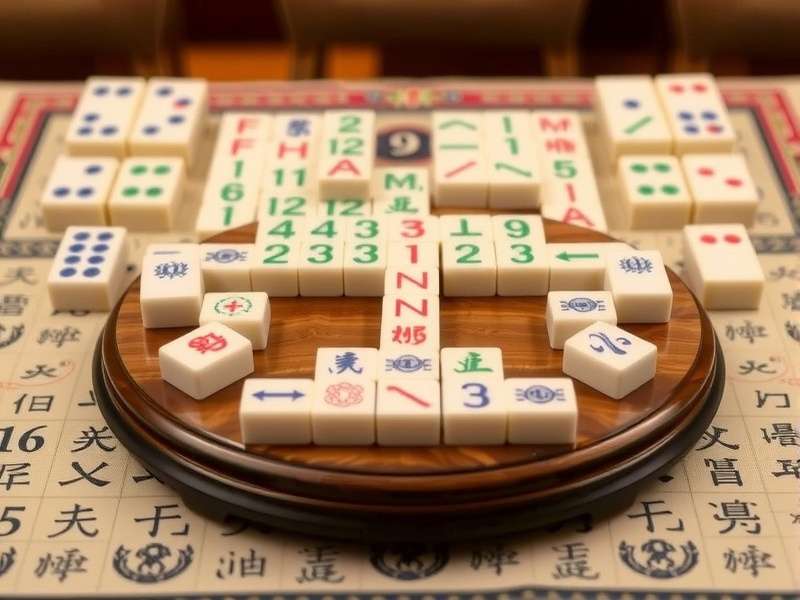
1. Understanding the American Mahjong Set Up
American Mahjong is a distinct variant that evolved from the Chinese game after it was brought to the United States in the 1920s. Over the decades, it developed its own unique rules, scoring system, and — most importantly — a very specific set up process that differs significantly from other Mahjong variants. If you're an Indian player familiar with the Chinese or Hong Kong styles, you'll notice some fascinating differences right away.
1.1 What Makes American Mahjong Different?
The American variant uses a standardised set of 152 tiles (including 8 jokers), whereas traditional Chinese Mahjong uses 144. The extra tiles — the jokers — add a whole new layer of strategy. But the biggest difference in the American Mahjong set up is the use of racks and pushers. Each player gets a wooden or plastic rack that holds their tiles hidden from opponents, and a pusher helps organise the tiles in front of them. This physical setup is iconic to American Mahjong.
Another key distinction: American Mahjong uses a standard card (published by the National Mah Jongg League, NMJL) that defines which hands are valid for the current year. So every year, the set up doesn't change, but the target hands do. This keeps the game fresh and challenging.
1.2 The Essential Components of an American Mahjong Set
Before we dive into the step-by-step set up, let's make sure you have all the components. A standard American Mahjong set includes:
- 152 tiles: 4 each of suits (Bamboo, Characters, Dots), Winds, Dragons, Flowers, and Seasons, plus 8 Jokers.
- 4 racks (one per player) — usually wooden or acrylic.
- 4 pushers (also called "tile pushers" or "shovers") — these help you push tiles forward when you declare a meld.
- 4 dice (standard six-sided dice).
- A Mahjong card (the current year's NMJL card or equivalent).
- A score sheet (or app) for tracking points.
If you're buying a set in India, many online stores ship internationally. Check out Mahjong Sets For Sale Near Me to find dealers who deliver to your city. Some Indian board game stores in Mumbai, Delhi, and Bengaluru now stock American Mahjong sets, thanks to the game's rising popularity.
1.2.1 Tiles and Their Meanings
Understanding the tiles is crucial for the set up. The suits are the same as in other Mahjong variants: Bamboo (Bams), Characters (Craks), and Dots (Doughnuts). Each suit runs from 1 to 9. Then you have the Winds (East, South, West, North), Dragons (Red, Green, White), and Flowers & Seasons. The 8 Jokers are wild and can be used to complete almost any meld — but there are restrictions, of course!
1.2.2 The Rack and Pusher System
The rack holds your tiles and keeps them concealed from other players. The pusher sits in front of the rack, and when you want to declare a meld (like a Pung or Kong), you push the relevant tiles forward with the pusher so everyone can see them. This system makes the American Mahjong set up both elegant and functional. It also speeds up gameplay because you don't have to pick up and rearrange tiles constantly.
1.2.3 The Charleston — The Heart of American Mahjong Set Up
If there's one thing that defines the American Mahjong set up, it's the Charleston. This is a compulsory passing round that happens before any tiles are drawn or played. Each player passes three tiles to the player on their right, then three to the player across, then three to the player on their left. Then you get a chance to pass back or "blind" pass. The Charleston is a strategic dance that shapes the entire game. We'll cover it in detail later.
2. How to Set Up American Mahjong: Step-by-Step
Now let's get into the practical, hands-on part. Follow these steps carefully, and you'll have a perfect American Mahjong set up every time.
2.1 Preparing the Tiles
First, gather all 152 tiles and turn them face down on the table. Shuffle them thoroughly — this is called "the wash" and is traditionally done with both hands, just like in Chinese Mahjong. Once shuffled, each player takes turns building a wall. Wait — in American Mahjong, we don't build a wall! Instead, tiles are placed into a central pool (or "dead wall" area) and drawn from there. Actually, let me clarify: in American Mahjong, the tiles are stacked in a wall just like the Chinese game, but the wall is much smaller because we use racks. Here's exactly how:
- Each player builds a section of the wall in front of them: 19 tiles long, 2 tiles high (total 38 tiles per section).
- The four sections are pushed together to form a square wall.
- The wall represents the "supply" of tiles that players will draw from during the game.
But wait — in many American Mahjong games, especially in clubs, the wall is simplified. Some groups just pile all tiles in the centre and draw randomly. However, the official American Mahjong set up uses the wall, and it's worth learning the traditional way.
2.2 The Initial Deal
Once the wall is built, the dealer (East) rolls the dice to determine where to break the wall. The deal proceeds as follows:
- East takes 4 tiles (2 stacks of 2) from the break point.
- Then South, West, and North each take 4 tiles in turn.
- This repeats for two more rounds, so each player ends up with 12 tiles.
- East then takes 2 more tiles (the 1st and 5th from the break), and the other players take 1 more tile each.
- Final count: East has 14 tiles; everyone else has 13.
Yes, the dealer always has one extra tile because they start the game by discarding first. This is identical to Chinese Mahjong.
2.3 Understanding the Card
The American Mahjong card is your playbook. It lists all the valid hands you can aim for, along with their point values. The card is updated every year by the NMJL. During the American Mahjong set up, every player should have the current card handy. The card is divided into sections: Singles & Pairs, Pungs, Kungs, Quintets, and Sextets. Each hand has a specific combination of tiles, and you cannot win with a hand that isn't on the card.
For Indian players new to American Mahjong, the card can look overwhelming at first. But don't worry — start with the simpler hands (like "2025 #1: Singles and Pairs") and work your way up. The card is your roadmap.
3. American Mahjong Rules and Gameplay
The set up is just the beginning. Once everything is in place, the game unfolds through a series of draws, discards, melds, and the all-important Charleston. Let's break down the core rules you need to know.
3.1 The Objective
The goal is to complete a valid hand from the current card — a combination of tiles that meets the exact requirements. The first player to do so declares "Mahjong!" and wins the round. Points are awarded based on the difficulty of the hand. The game is typically played over 16 rounds (or a predetermined number), and the player with the most points at the end wins.
3.2 Melds and Combinations
Melds are groups of tiles that you reveal to other players. There are three types:
- Pung: Three identical tiles (e.g., three 5-Bams).
- Kong: Four identical tiles (e.g., four Red Dragons).
- Quintet / Sextet: Five or six identical tiles (using jokers) — these are unique to American Mahjong and are very powerful.
You can also have Singles & Pairs hands, which are sequences or specific tile combinations. Jokers can be used to substitute for any tile in a meld, but they cannot be used in Singles & Pairs hands (except in certain card-specific exceptions).
3.3 Scoring System
Scoring in American Mahjong is based on the point value of the completed hand, as listed on the card. Hands range from 25 points (simple) to over 1,000 points (extremely rare). Additionally, there are bonuses for:
- Winning as East (dealer) — double points.
- Drawing the winning tile from the wall (self-draw) — extra bonus.
- Having no jokers in your hand — "pure" hand bonus.
If you're coming from Chinese Mahjong, you'll notice that American scoring is more card-driven and less reliant on fan (patterns). This makes it easier to learn but harder to master because you have to memorise the card.
4. American Mahjong vs Other Variants
One of the best ways to understand the American Mahjong set up is to compare it with other popular variants. Let's see how it stacks up against Chinese Mahjong and Japanese Riichi.
4.1 American vs Chinese Mahjong
The most obvious difference is the set up: American uses racks and pushers, while Chinese uses only the wall. The Chinese game has more complex scoring (with fans like "Half Flush" and "Full Flush") and doesn't use jokers. The Charleston is unique to American Mahjong. Also, the Chinese game is often played with a "flower" hand, where you collect all four flowers for an automatic win — American Mahjong doesn't have this rule.
If you're an Indian player who grew up playing Chinese Mahjong in community clubs, you'll find American Mahjong faster and more structured, but it takes time to get used to the card system.
4.2 American vs Japanese Riichi Mahjong
Riichi Mahjong is famous for its "riichi" declaration (a bet that you're one tile away from winning) and its complex scoring with "yaku" (patterns). The American Mahjong set up is simpler in terms of scoring but more rigid in terms of hand requirements (the card). Riichi uses no jokers, and the wall is built differently (with a "dead wall" for bonus tiles). American Mahjong also doesn't have the "furiten" rule (cannot win on a tile you previously discarded), which makes it more forgiving for beginners.
For Indian players who enjoy strategy games, both variants are rewarding. But if you want a game that's easy to learn but hard to master, American Mahjong is a fantastic choice.
5. Tips and Strategies for Beginners
Setting up the game is one thing; playing it well is another. Here are some battle-tested strategies from India's top Mahjong players.
5.1 Reading the Table
During the American Mahjong set up, pay attention to what tiles your opponents are passing during the Charleston. If someone passes you three East Winds, they might be avoiding that suit. This gives you clues about what hands they're building. Also, watch what tiles they pick up from the wall — if they hesitate before picking, they might be deciding between two hands.
5.2 Defense Strategies
In American Mahjong, defense is often overlooked by beginners. Here's a simple rule: "Watch the discards." If you see that three 7-Bams have already been discarded, it's probably safe to discard your 7-Bam. But if only one has been discarded, holding on to it might be wise. Also, don't be afraid to use jokers defensively — holding a joker means you can complete a meld at any time, which can surprise opponents.
Another tip: don't commit to a hand too early. The Charleston gives you three chances to adjust your hand. Use them wisely. If you receive tiles that don't fit your initial plan, pivot to a different hand. Flexibility is key.
6. Where to Play American Mahjong in India
India's Mahjong community is growing rapidly. From dedicated clubs in metro cities to online platforms, here's where you can enjoy the game.
6.1 Online Platforms
If you can't find a physical group, the internet is your best friend. Platforms like Kurnik Mahjong offer free online play with players from around the world. You can also try Free Mahjong Titans for a more casual experience. For those who want to practise the American variant specifically, the Mahjong Relax app has a good American mode. And if you're looking for a comprehensive resource, Arkadium Mahjong has tutorials and free games.
6.2 Local Clubs in India
In India, Mahjong clubs are thriving in cities with large expat communities and among locals who've discovered the game. Check out:
- Mumbai: The Bombay Mahjong Club meets every Saturday in Bandra. They welcome beginners.
- Delhi: Delhi Mahjong Enthusiasts have a monthly tournament at the India Habitat Centre.
- Bengaluru: The Bangalore Mahjong Circle is one of the most active, with weekly games in Indiranagar.
- Chennai: Adyar Mahjong Group focuses on American Mahjong and hosts coaching sessions.
If you're looking for equipment, Mahjong Sets For Sale Near Me can help you find local sellers. Many Indian players also order from international sites, but shipping can be costly. Some local board game cafes now rent sets — a great way to try before you buy.
7. Frequently Asked Questions
Here are answers to the most common questions Indian players have about the American Mahjong set up.
7.1 Is American Mahjong difficult to learn?
Not at all! The basic set up and rules can be learned in a single session. The card system takes a bit more time to memorise, but most players pick it up within a few games. Start with simple hands and work your way up.
7.2 How long does an American Mahjong game last?
A single round takes about 15–20 minutes. A full game with 16 rounds can last 2–3 hours, depending on the number of players and their experience level. The American Mahjong set up itself takes about 5 minutes once you're familiar with it.
7.3 Can I play American Mahjong with a Chinese Mahjong set?
You can, but you'll be missing the 8 jokers, which are essential for American Mahjong. If you have a Chinese set, you can use the blank tiles or Flower tiles as jokers, but it's not ideal. For the full experience, invest in a proper American set. Check Mahjong Tiles Free for printable tile templates if you want to practise before buying.
7.4 What's the best way to memorise the card?
Practice, practice, practice! Use the Mahjong Tiles Cheat Sheet to familiarise yourself with the tile names and suits. Then study the card in sections. Many Indian players find it helpful to group hands by type (Singles, Pungs, etc.) and practise with flashcards.
7.5 Is Mahjong popular in India?
Yes, it's growing fast! What started as a niche hobby in expat communities has spread to local players across the country. The game's blend of strategy, luck, and social interaction resonates with Indian culture. Online platforms like Mahjong Shanghai have also boosted its popularity.
8. Conclusion: Your American Mahjong Journey Starts Now
The American Mahjong set up is more than just a ritual — it's the foundation of a rich, strategic, and deeply social game. By mastering the set up, you're setting yourself up for success in every game you play. Whether you're playing in a Mumbai club, an online tournament, or with friends in your living room, the principles are the same: arrange your tiles thoughtfully, use the Charleston wisely, and always keep the card close.
India's Mahjong community welcomes you with open arms. We've seen players from all backgrounds — college students, working professionals, retirees — fall in love with this game. It's a game of patience, cunning, and joy. So gather your tiles, set up your rack, and call out "Mahjong!" with confidence.
If you found this guide helpful, please leave a comment below, rate the article, and share it with fellow Mahjong enthusiasts. And don't forget to explore our other resources: Mahjong Games Free, Jouer Au Mahjong, and Mahjong Relax for more ways to enjoy this timeless classic. Happy playing!
This article was last updated on by the PlayMahjongIndia editorial team. We strive to keep our content accurate and up-to-date. If you spot any errors or have suggestions, please reach out.
Search Our Mahjong Library
Find more guides, tips, and resources about American Mahjong and other variants.
Share Your Experience
Have you tried the American Mahjong set up? Got a tip or a question? Leave a comment below!
Rate This Guide
How helpful was this article? Your feedback helps us improve.